Software engineering, web platforms, and cloud systems — designed, built, and maintained with care.

Software engineering practice

Systems that stay understandable long after the first release

RUTE MEDIA & EVENTS LIMITED proposes software work for organisations that depend on precise processes: custom applications, web platforms, cloud environments, integrations and the ongoing maintenance that keeps them dependable.

Written enquiries: [email protected]

Abstract three-dimensional network of connected nodes representing distributed software systems

Introduction

A practice organised around clarity

RUTE MEDIA & EVENTS LIMITED operates as a software engineering practice. The website describes the work offered and how that work is approached. It does not present a portfolio, a client list or performance figures, because none are claimed.

The starting point of any engagement is the process a system is meant to support. The questions asked first are practical: what has to happen, in which order, who is accountable for each step, what data already exists, and which parts break today. Architecture follows from those answers rather than preceding them.

The intended result is software a client can keep: readable code, documented decisions, reproducible environments and a handover that does not depend on one person's memory.


Core areas

Six areas of expertise, described plainly

  • 01

    Custom software

    Applications shaped around a specific process instead of a generic product template.

  • 02

    Web platforms

    Server-rendered and client-rendered interfaces built for readability and speed.

  • 03

    Cloud architecture

    Environments, deployment paths and observability defined before scaling decisions.

  • 04

    Automation

    Repetitive administrative steps replaced with scheduled or event-driven routines.

  • 05

    Data integration

    Systems joined through documented interfaces so reporting draws on one source.

  • 06

    Maintenance

    Dependency updates, monitoring and small improvements after the first release.

Developer workspace with a laptop showing source code beside architecture sketches on paper

Custom software development

Built for one process, not for everyone's

Off-the-shelf tools tend to cover the common eighty per cent of a process and force spreadsheets around the rest. Custom development addresses the remainder: the approvals, exceptions, calculations and records that make an organisation's work specific.

Work typically covers domain modelling, an application with role-appropriate screens, a documented API, database schema and migrations, automated tests, and a deployment pipeline. Delivery is incremental so that each part can be reviewed while the scope is still adjustable.

Web platforms and digital experiences

Interfaces judged by how fast they answer

Structure first

Semantic markup, a real heading hierarchy and server-rendered content so pages are readable before scripts finish loading.

Accessible by default

Sufficient contrast, keyboard-operable controls, descriptive alternative text and respect for reduced-motion preferences.

Performance budgets

Responsive images with explicit dimensions, lazy loading below the fold and a deliberately small dependency list.

Editable content

Content structures defined so that text and imagery can be changed without a developer rewriting templates.

Abstract render of stacked translucent layers joined by blue conduits, representing cloud infrastructure tiers

Cloud architecture and infrastructure

Environments that can be rebuilt from a repository

Infrastructure is treated as source code. Environments are described in configuration, provisioned repeatedly, and separated so that testing never depends on production data.

Typical elements include container images, an automated build and release pipeline, secret handling kept out of the codebase, backup and restore procedures that are actually exercised, and logging, metrics and alerts chosen so an incident can be diagnosed rather than merely noticed.

Business process automation

Removing the steps nobody should repeat

Automation begins with a written description of the current sequence, including the exceptions people handle informally. Only then is it clear which steps are safe to automate and which require a decision to remain with a person.

Candidates are usually transfers between systems, document generation, scheduled reconciliations, notification rules and validation of incoming records. Each automated step is logged so that its result can be inspected afterwards, and every routine has a defined behaviour for failure rather than silent abandonment.

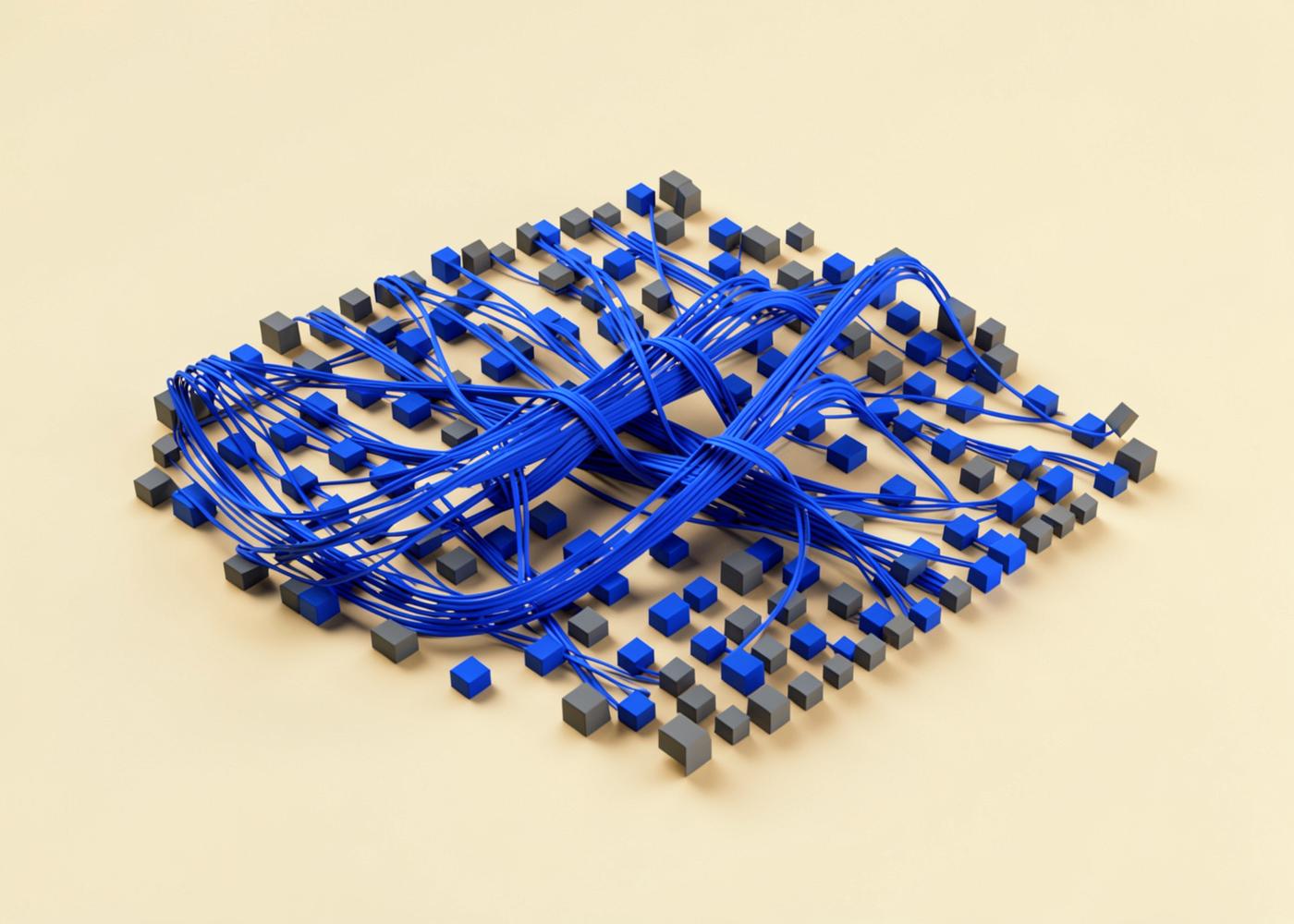
Abstract render of blue cables converging over a grid of small cubes, representing data integration between systems

Data integration and reporting

One agreed set of numbers

Disagreement between reports is usually a definition problem before it is a tooling problem. Integration work therefore starts by naming entities and metrics, then building the pipelines that populate them.

Deliverables can include documented interfaces between systems, scheduled or event-driven synchronisation, validation and de-duplication rules, a reporting schema, and dashboards or exports for the people who need them. Data quality checks run with the pipeline rather than after a complaint.

Security-conscious engineering

Careful defaults instead of assurances

No engineering practice can promise that a system will never be attacked successfully. What can be described is the discipline applied: least-privilege access, validated input at every boundary, parameterised queries, encrypted transport, secrets held outside source control, and dependency updates treated as routine maintenance.

Personal data is handled according to its purpose: collected only where a feature requires it, retained according to an agreed policy, and removable on request. Security decisions are written down alongside the code so future changes do not quietly undo them.

Abstract sculpture of an interlocking grey shell around a blue lattice core, representing layered system protection

Delivery process

Five stages, each with something to review

  1. 01

    Discovery

    The process, systems and constraints are documented, with the desired outcome stated in plain language.

  2. 02

    Definition

    Scope, architecture and acceptance criteria are agreed in writing before implementation begins.

  3. 03

    Implementation

    Work proceeds in short increments, each reviewable, with tests written alongside the code.

  4. 04

    Verification

    Functional, integration and regression checks run automatically; findings are recorded and re-tested.

  5. 05

    Handover

    Source code, documentation, environment configuration and operational notes are transferred.

Quality assurance and testing

Testing written with the feature, not after it

Automated tests exist so a change can be made confidently a year later. Unit tests cover logic and edge cases, integration tests cover the boundaries between components, and end-to-end checks cover the few paths that must never break.

Alongside the automated suite, exploratory testing looks for the situations a specification did not anticipate: unusual data, interrupted sessions, concurrent edits, slow networks and small screens. Defects are recorded with reproduction steps and closed only when a test demonstrates the fix.

Maintenance and long-term support

The years after launch

Dependency and platform updates

Libraries, runtimes and base images are updated on a schedule, with tests confirming that behaviour is unchanged.

Monitoring and response

Logs, metrics and alerts are reviewed so degradation is noticed before it becomes an outage.

Corrective work

Reported defects are reproduced, fixed and covered by a regression test.

Incremental change

Small improvements are delivered continuously rather than accumulated into risky rewrites.

Illustrative examples

Hypothetical scenarios, written to show the shape of the work

The following scenarios are illustrative examples only. They are not client projects, case studies or descriptions of completed work.

Scheduling across two systems

An organisation keeps bookings in one tool and staffing in another, reconciling them by hand each morning. An illustrative engagement would define a shared model, synchronise the two systems through documented interfaces, and surface conflicts as they occur instead of at the end of the day.

A reporting layer for mixed sources

Figures arrive from a database, a spreadsheet export and a third-party API, each with its own definitions. An illustrative engagement would agree the metric definitions, build a validated pipeline into a reporting schema, and provide a small set of dashboards drawn from it.

Modernising an ageing internal tool

An internal application still works but is difficult to change and cannot be deployed safely. An illustrative engagement would add tests around current behaviour, split the system into maintainable parts, and introduce an automated deployment path before adding features.

Working principles and collaboration

Fewer surprises, more written decisions

  • Scope changes are discussed and recorded before they are implemented.
  • Progress is shown as working software rather than described as a percentage.
  • Technical trade-offs are explained in language a non-specialist stakeholder can act on.
  • Every decision that constrains the future is written down next to the code it affects.
  • Clients keep their source code, data and infrastructure definitions throughout.
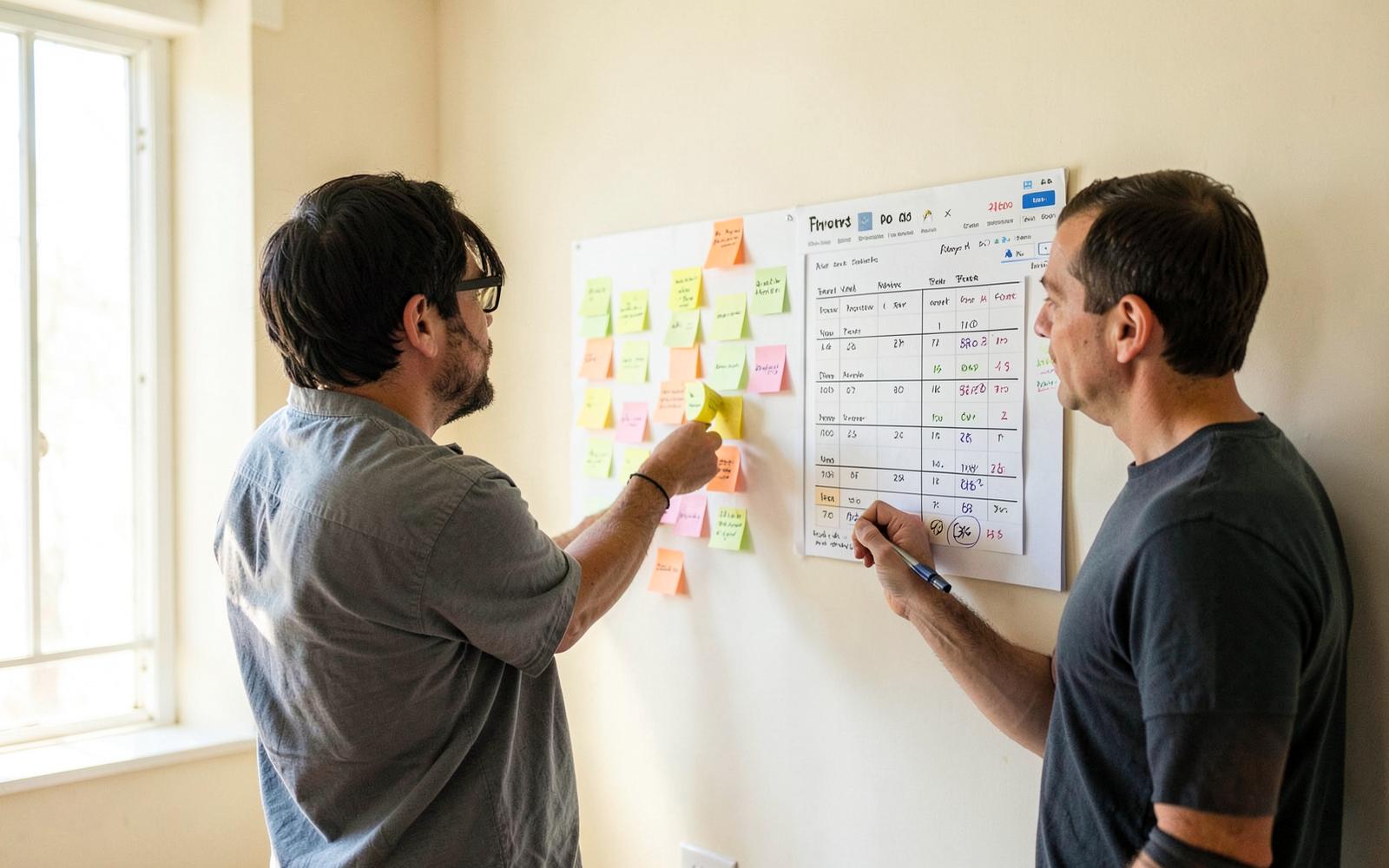
Two colleagues reviewing a planning board of notes and a delivery timeline in a bright room

Frequently asked questions

Answers in full

What kind of work does the company propose to take on?
Software engagements: building a custom application, developing or rebuilding a web platform, setting up cloud infrastructure, integrating existing systems, automating a manual workflow, adding reporting, or maintaining software that is already in use.
How does an engagement usually start?
With a written description of the problem. Enquiries sent by email can outline the current process, the systems involved, the constraints that matter, and the outcome expected. A scope discussion follows from that description.
Which technologies are used?
Technology choices follow the requirements rather than the reverse. Typical work covers web frontends, server-side APIs, relational databases, message queues and managed cloud services. Existing stacks in a client's environment are respected wherever they are workable.
Are timelines and prices published on this website?
No. Effort depends on scope, existing systems and data quality, so no pricing, duration or performance figures are published here. Estimates belong to a specific scope discussion.
Are the use cases on this page real client projects?
No. They are illustrative examples written to show the type of problem an engagement could address. They do not describe completed work, named clients or measured results.
What happens to a project after release?
Maintenance can be arranged separately: dependency and security updates, monitoring, defect fixes and incremental changes. Documentation and source code are handed over so another team can continue the work if preferred.

Contact information

Written enquiries

RUTE MEDIA & EVENTS LIMITED

[email protected]

rutemediaevents.com

Enquiries can cover project scope, technical requirements, existing systems and possible forms of collaboration. A short written description of the process and the outcome expected is usually enough to begin a discussion.